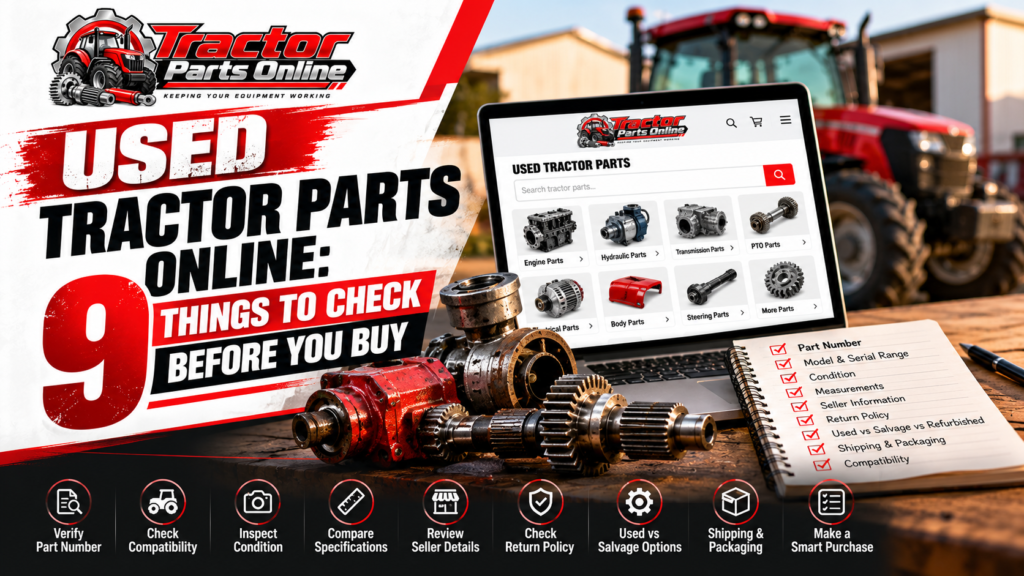
Buying used tractor parts online can save time and money, but photos rarely tell the whole story. A part may look correct while having hidden wear, corrosion, damaged threads, mismatched specifications, or an uncertain history. Whether you need an engine component, hydraulic assembly, transmission part, or PTO component, careful verification is essential. These nine checks can help you avoid costly mistakes and make online sourcing easier.
1. Confirm the Exact Part Number
Start with the original part number whenever possible. Tractor manufacturers may use different components across similar models, and production changes can affect fitment.
Compare the number on your existing component with the seller’s listing. If the number is missing, ask for identification details rather than assuming a similar-looking part will work.
When an original number has been superseded, confirm that the replacement number is intended for your tractor. This is especially useful when shopping for used tractor replacement parts for older machines.
2. Verify Tractor Make, Model, and Serial Range
Model names alone are not always enough. A tractor model may have different engines, transmissions, hydraulic systems, or attachments depending on its production period.
Provide the seller with the make, exact model, and serial number when available. Ask whether the component came from the same model or a compatible application.
If the seller cannot confirm fitment, treat the listing as unverified. Checking compatibility is easier than dealing with an incorrect shipment.
3. Inspect Photos for Wear and Damage
Good photos should show more than the cleanest side of the part. Look closely at mounting points, splines, gears, shafts, connectors, threads, seals, housings, and other high-wear areas.
Watch for:
- Cracks or broken mounting ears
- Heavy rust or pitting
- Worn splines or gear teeth
- Damaged threads
- Oil leakage or residue
- Bent shafts
- Missing hardware or fittings
Ask for close-up photos when important areas are not visible. Refurbished tractor parts should also have a clear description of what was repaired, replaced, or tested.
4. Ask About the Part’s Actual Condition
“Used” is a broad description. One component may have light wear, while another may have significant operating hours or require rebuilding.
Ask whether the part is used, inspected, tested, rebuilt, or refurbished. For mechanical assemblies, ask which functions were checked and whether any components were replaced.
Terms such as “quality used tractor parts” should not replace specific condition information. A useful listing explains what the buyer is actually receiving.
5. Compare Measurements and Specifications
A physical match is not always a functional match. Before buying used tractor components, compare dimensions and specifications that affect performance.
Depending on the part, these may include shaft diameter, mounting-hole spacing, gear count, port size, voltage, pressure rating, flow rate, capacity, or connection type.
This is especially important for hydraulic and transmission components. A part that bolts into place may still be unsuitable if its operating specifications differ from the tractor’s requirements.
6. Check the Seller’s Information
A used tractor parts supplier should provide enough information to understand what is being sold. Look for a clear business identity, contact information, part descriptions, photographs, and purchasing terms.
If you are considering a used tractor parts dealer or marketplace, review seller feedback and policies. Be cautious about vague descriptions, stock images only, missing identification numbers, or pressure to pay without normal buyer protections.
Searching for used tractor parts near me can also help when you prefer to inspect larger or expensive components locally.
7. Understand the Return and Warranty Terms
Used parts may have different return conditions from new components. Read the policy before ordering, especially for expensive assemblies.
Check whether returns are accepted, how long you have to report a problem, and who pays return shipping. If a seller offers a limited warranty, understand what it covers and whether installation requirements apply.
These details matter because compatibility may only become clear after comparing the received component with the tractor or testing the part.
8. Compare Used, Salvage, and Refurbished Options
Not every used component is the same. Used agricultural equipment parts may come directly from another machine, while tractor salvage parts and tractor salvage yard parts are typically sourced from dismantled equipment.
Refurbished parts may have been cleaned, inspected, repaired, or rebuilt, depending on the seller. Their higher cost may make sense when installation is difficult or the component is hard to replace.
Cheap used tractor parts are not automatically better value. Consider the total cost, including shipping, installation, possible rebuilding, and the risk of needing another replacement.
For location-specific sourcing, you can also explore used tractor parts options and broader tractor parts listings.
9. Confirm Shipping, Packaging, and Identification
Heavy components can be damaged during shipping if they are not packaged correctly. Before ordering, check whether the seller explains how oversized or fragile parts are prepared for transport.
Confirm the shipping details and whether all included components match the listing. For assemblies sold with brackets, fittings, covers, or hardware, make sure those items are included if you need them for installation.
Take photos when the package arrives, especially if there is visible damage. Keep the invoice, listing details, and part identification until the component has been verified.
How to Get Better Results When Buying Used Tractor Parts Online
A simple purchasing process can reduce mistakes:
- Identify the original part number.
- Record the tractor model and serial number.
- Compare photos, dimensions, and specifications.
- Ask questions about condition and testing.
- Review seller and return information.
- Compare used, refurbished, salvage, and aftermarket alternatives.
- Confirm shipping and included components before paying.
Conclusion
Buying used tractor parts online is safer when you treat the purchase as a verification process rather than a simple transaction. Confirm the part number, tractor application, condition, measurements, seller details, return terms, and shipping requirements before ordering. Compare used, salvage, and refurbished options based on total cost and intended use, not just listing price. Careful checking can help you locate hard-to-find components while reducing the risk of receiving a part that does not fit or meet your tractor’s requirements.
FAQ's
They can be practical when the part is correctly identified and its condition is understood. The value depends on compatibility, condition, and alternatives.
Verify the part number, tractor model, condition, measurements, seller information, return policy, and shipping details before ordering. Ask for additional photos or specifications when anything is unclear.
No. Salvage parts are generally removed from existing equipment, while refurbished parts have typically undergone cleaning, inspection, repair, or rebuilding. The exact work depends on the seller.
Start with the original part number and confirm the component's identification before purchase. Ask for photos of labels, cast numbers, or other markings when relevant, and verify the application with the seller.