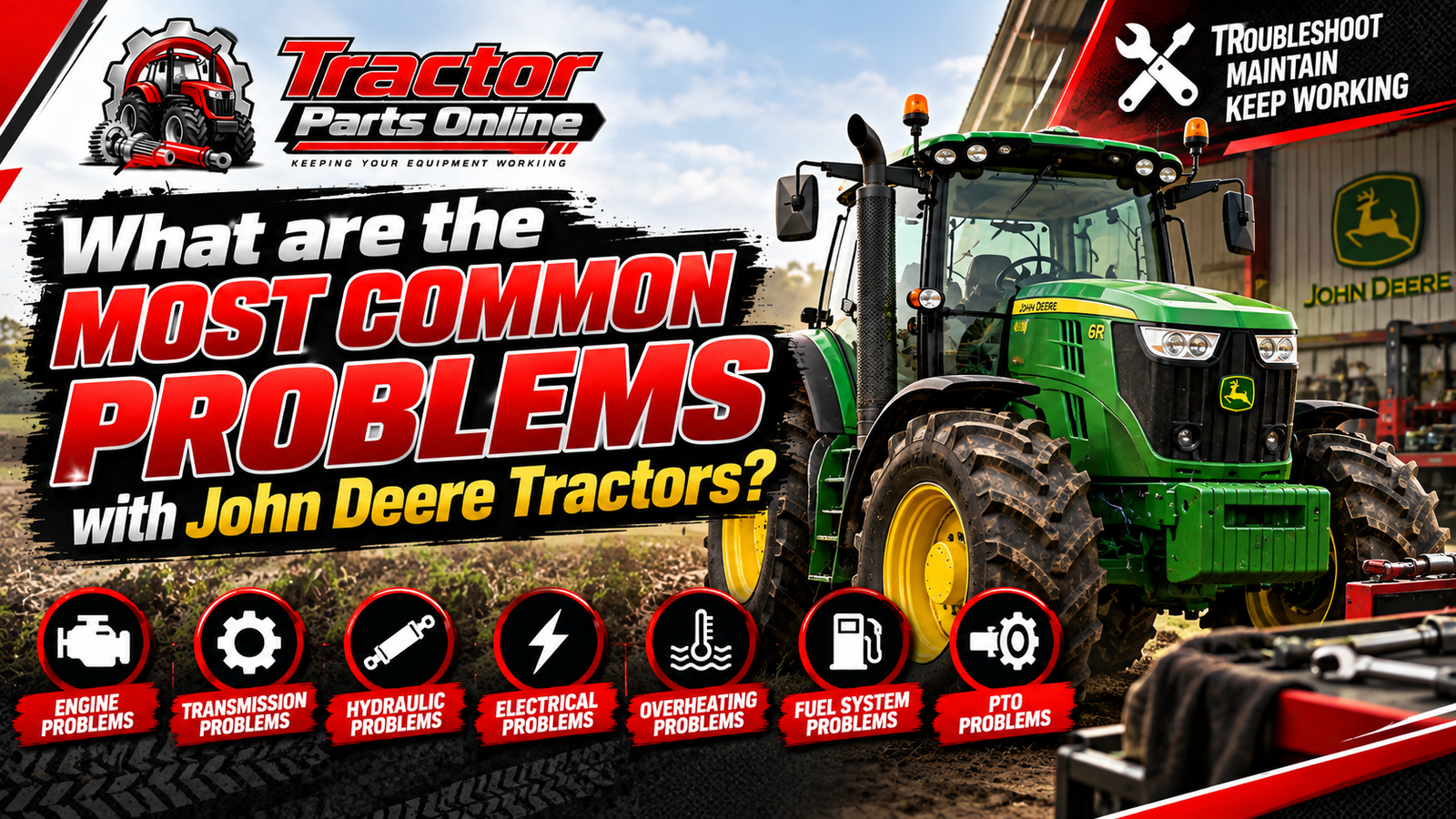
John Deere tractors are built for demanding work, but like any agricultural machine, they can develop faults through wear, poor maintenance, operating conditions, or electrical and hydraulic issues. The common John Deere tractor problems vary by model and age, so no single fault list applies to every machine. Common trouble areas include starting and fuel issues, overheating, transmission behavior, hydraulic performance, PTO operation, and electrical faults. John Deere operator manuals organize troubleshooting around engine, transmission, hydraulic, electrical, hitch, and PTO-related systems.
What are the most common problems with John Deere tractors?
The most frequent issues generally involve starting and fuel delivery, cooling, electrical systems, hydraulics, transmissions, and PTO operation. Exact causes depend on the tractor’s model, engine, transmission, and configuration, so the operator’s manual should be the main reference. John Deere provides model-specific operator and technical manuals for this purpose.
John Deere tractor starting and engine problems
A tractor that cranks but will not start may have a fuel or air problem, while one that does not crank can have a battery, fuse, switch, or safety-interlock issue. John Deere troubleshooting information lists low battery charge, poor battery connections, blown fuses, an engaged PTO, incorrect or stale fuel, plugged fuel filters, restricted air intake, and injector problems among possible causes.
If the engine starts but runs roughly, stalls, lacks power, or produces unusual smoke, check basic items such as fuel level and quality, filters, air intake restriction, coolant level, and visible leaks. Do not continue operating a tractor with serious warning lights, abnormal noises, or signs of low oil pressure.
John Deere tractor overheating problems
Overheating can result from restricted cooling airflow, low coolant, a dirty radiator or oil cooler, cooling-system faults, or excessive load. Work in dust and crop residue can increase the need to keep cooling areas clean.
When temperature rises, reduce the load and follow the machine’s shutdown procedure. Never open a hot, pressurized cooling system. Once safely cooled, inspect the cooling system according to the model-specific manual.
John Deere tractor transmission problems
Transmission issues can appear as difficult shifting, abnormal noise, slipping, poor response, low pressure, or overheating. John Deere manuals identify low transmission oil, clogged transmission-hydraulic filters, internal hydraulic leakage, and linkage or pressure-control problems as possible causes on applicable models.
Start with simple checks such as the correct fluid level and filter condition. If the tractor remains difficult to shift, loses drive, or shows transmission-pressure warnings, avoid unnecessary continued operation and seek qualified service.
John Deere tractor hydraulic problems
Hydraulics operate loaders, three-point hitches, steering assistance, and other implements, so hydraulic faults can quickly affect productivity. Common symptoms include slow or weak functions, unusual noise, overheating, leaks, or an implement that will not move correctly.
Low fluid, contaminated oil, restricted filters, air entering the system, or internal leakage can affect performance. John Deere troubleshooting documentation lists low oil supply and clogged filters among possible causes of hydraulic and transmission-related issues.
John Deere tractor electrical problems
Electrical faults can cause hard starting, warning lights, charging problems, non-working lights, faulty gauges, or intermittent operation. Battery condition, corroded terminals, loose connections, wiring, fuses, relays, alternator performance, and switches are common areas to inspect.
Begin with a visual inspection for corrosion, loose terminals, damaged wires, and blown fuses where the operator manual permits. Never replace a fuse with an incorrect rating. Modern models can also display diagnostic codes, which may require model-specific service information or professional diagnostic equipment.
John Deere tractor PTO problems
PTO problems may involve failure to engage, failure to disengage, incorrect operation, unusual noise, or a safety interlock preventing engagement. Depending on the model, PTO operation can involve switches, transmission position, brake or seat interlocks, and electronic controls.
Before troubleshooting, disengage the PTO and follow the operator manual’s safety procedure. Check the control setting, implement connection, and warning messages. Never work near a moving PTO shaft.
John Deere tractor fuel system problems
Fuel-related problems can result from contaminated fuel, water, clogged filters, restricted vents, or injection-system faults. Symptoms include hard starting, rough running, stalling, low power, or inconsistent performance.
Use the fuel and filtration specifications required for the specific tractor. John Deere maintenance schedules include fuel-filter checks and fuel-system service, with intervals varying by model.
John Deere tractor troubleshooting: where to start
A simple troubleshooting process can prevent unnecessary parts replacement. First, identify the exact symptom and when it occurs. Check warning lights or diagnostic codes, then inspect fluid levels, filters, battery connections, fuses, belts, hoses, and visible leaks where the manual permits operator checks.
Next, compare the symptom with the tractor’s model-specific troubleshooting chart. John Deere manuals provide possible causes and corrective actions, and some repairs are specifically directed to a dealer.
For internal engine, transmission, hydraulic, or electronic problems, professional diagnosis is safer than replacing parts based on guesswork.
How maintenance prevents common John Deere tractor issues
Regular maintenance can prevent or reduce many avoidable tractor problems. Depending on the model, service schedules can include engine-oil and fuel-filter checks, transmission or hydraulic-oil checks, lubrication, battery inspection, brake checks, and other scheduled services.
Use the correct lubricants, filters, and service intervals for the exact model. Keep cooling areas clean, address small leaks early, check tires and wheel components, and repair unusual symptoms before demanding fieldwork. Good records also make recurring faults easier to diagnose.
Conclusion
The most common John Deere tractor problems usually involve starting and fuel delivery, cooling, transmission, hydraulics, electrical components, and PTO systems. The same symptom can have several causes, so troubleshooting should begin with safe, simple checks and the correct model-specific manual. Regular servicing, clean filters and cooling components, correct fluids, and prompt attention to warning signs can reduce downtime. When a fault points to an internal or electronic failure, accurate diagnosis is better than replacing parts based on guesswork.
FAQ's
Possible causes include a weak battery, poor electrical connections, a blown fuse, an engaged PTO or faulty safety switch, stale or incorrect fuel, a plugged fuel filter, restricted air intake, or injector-related problems.
Low coolant, restricted airflow, dirty cooling components, cooling-system faults, or excessive load can contribute to overheating. Stop safely, allow the tractor to cool, and inspect it according to the operator manual.
Low or contaminated fluid, a restricted filter, air in the system, or an internal hydraulic problem can reduce performance. Check fluid and filter condition according to the model-specific service instructions.